Simplifying investment delivery and strengthening governance: where fiduciary management fits
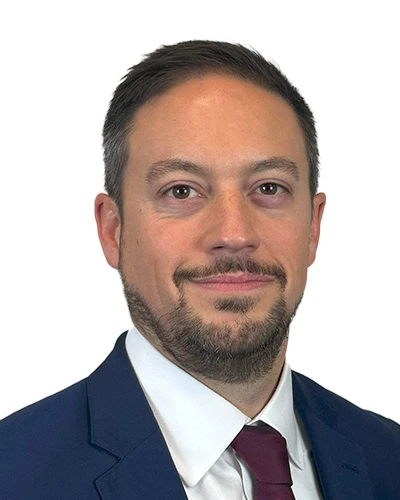
By Chris Dickins, Client Director, TPT Investment Management
Today’s pension scheme trustees operate in an increasingly complex environment. Our recent trustee research (1) suggests that, rather than tackling one dominant challenge, boards are now balancing an increasing number of competing governance, regulatory and operational demands.
Simplified approaches, such as consolidation and delegation, can help some pension schemes to ease the strain. One such approach is delegation of investment decisions and execution to a fiduciary manager. This article explains how a fiduciary management approach works in practice, and explores its potential to help to strengthen governance and free up more time for boards to focus on strategic priorities.
FM vs investment consulting – what’s the difference?
Investment consulting and fiduciary management may both result in similar investment outcomes – the difference is in how investment decisions are made and implemented. Investment consulting provides advice for trustees to act upon, whereas fiduciary management combines advice with delegated implementation and oversight.
- Investment consulting: Trustees retain responsibility for investment decision-making, implementation and ongoing monitoring, taking advice and recommendations from their investment consultant.
- Fiduciary management: Trustees delegate agreed investment responsibilities to a fiduciary manager, who advises on, implements and monitors the investment strategy on the trustees' behalf within parameters set by the trustees.
This way of working, which uses a legally-binding Fiduciary Management Agreement (FMA) to set investment guidelines and streamline the decision-making process, could improve governance efficiency and support trustees in pursuing their investment objectives.
Quicker decision making
When investing in any market, the speed of decision making and execution can influence how effectively risks and opportunities are managed – whether that’s responding to market threats or taking advantage of opportunities as they arise. Following the 2022 gilts crisis, which exposed the importance of prompt decision making and implementation, 41% of UK pension scheme representatives said their governance model didn’t support them, or could have supported them better (2). Isio concluded that the fiduciary model had generally weathered the test well, and that managers “acted quickly to preserve hedging and manage market risks” (3).
In volatile markets, opportunities and risks can emerge rapidly. Strategies that rely on pre-agreed market triggers may benefit from a governance framework that enables prompt implementation without requiring a full trustee decision-making process each time.
While investment outcomes will always depend on market conditions and manager skill, a delegated model can enable investment decisions to be made and executed more quickly than is often possible under a traditional advisory arrangement.
More effective use of time and expertise
Traditional consulting models often require trustees to engage with several underlying managers and oversee a wide range of reporting. The meetings themselves, combined with additional work to then monitor and oversee activities, can take up valuable time that could otherwise be spent on more strategic priorities.
Delegated authority may allow decisions to be implemented more efficiently in pursuit of trustees' objectives, while facilitating more tailored portfolio construction; because a single governance framework often brings together strategic advice, portfolio design, manager research, implementation and monitoring, there may be a more direct link between investment objectives and execution. A centralised view across managers and asset classes may help identify opportunities that better fit the overall strategy and allow long-term manager relationships to be used more effectively.
Skilled, accurate implementation
In traditional advisory arrangements, strategy design, manager selection, implementation and ongoing monitoring can involve multiple parties and decision-making stages. This can create the potential for delays or variations between the original strategic objective and the eventual implementation. A fiduciary model brings these activities together within a single governance framework, helping to maintain alignment between advice and execution.
This can be particularly valuable in areas such as liability-driven investment, dynamic de-risking and portfolio rebalancing, where ongoing monitoring and timely implementation are important to achieving the intended investment outcome.
Fiduciary management doesn’t mean relinquishing control. Trustees remain responsible for setting strategic objectives and overseeing outcomes, while operating within a framework that enables investment decisions to be implemented efficiently.
Key considerations when appointing a fiduciary manager
Done well, delegation to a fiduciary manager can free up time, improve responsiveness, strengthen governance frameworks and ensure closer alignment between advice and implementation. Its success relies on clearly defined decision-making frameworks, robust reporting and appropriate oversight - particularly important where responsibilities are delegated to third parties.
With this in mind, there are some practical steps trustees can take to ensure that the roles, responsibilities and expectations of them and the fiduciary manager are clear.
- Trustees are required to conduct a competitive tender process before appointing a fiduciary manager to manage 20% or more of total scheme assets, unless an exemption applies. TPR provides guidance on fiduciary management tenders and setting objectives for investment consultants.
- The FMA should clearly define the scope of delegated authority and decision-making boundaries. This should set out the areas where the fiduciary manager can act without prior trustee approval, together with any investment restrictions, risk limits and reporting requirements.
- Agree a reporting and communication framework that provides the level of transparency and oversight appropriate for the scheme. Signs of an effective trustee-manager relationship include attendance at meetings, open lines of communication and clear, outcome-focused reporting.
The benefits of any potential delegation will vary from scheme-to-scheme and should be considered in the context of the scheme’s objectives, governance budget and the trustees’ preferred way of working. Importantly, fiduciary management doesn’t mean relinquishing control. Trustees remain responsible for setting strategic objectives, monitoring performance and overseeing outcomes, while operating within a governance framework that allows investment decisions to be implemented efficiently and within agreed parameters.
This content is intended for professional audiences only and should not be relied upon by individual scheme members. This article is provided for information purposes only and does not constitute financial advice, investment guidance, or a recommendation to buy or sell any investment. Past performance is not a reliable indicator of future results. Investments can go down as well as up, and you may get back less than you invest. If you are considering making an investment, you should seek advice from a regulated financial adviser. Any examples or market events referred to are provided for illustrative purposes only and should not be interpreted as an indication of future market behaviour or investment performance.
(1) TPT DB Trustee Pulse 2026 https://www.tpt.co.uk/news-insights/db-trustee-pulse-2026/
(2) Navigating the key issues facing schemes in 2023 – Pensions Management Institute in partnership with Schroders https://www.pensions-pmi.org.uk/media/xsgnnojc/pmi_schroders_report_2023.pdf
(3) Fiduciary Manager Trends for 2023/24 – Isio https://www.isio.com/app/uploads/2024/07/2406-FM-Oversight-Marketing-Plans-Manager-Trends-Paper-compressed.pdf
Related news & insights
-

UK savers back Pension Commission findings
UK pension savers are increasingly aware they’re falling short on retirement savings, according to new research from TPT. -

Private credit is likely here to stay, despite growing jitters
Private credit faces growing scrutiny, but its long-term role remains strong. TPTIM's Nick Stacey, explores why opportunity persists despite rising market pressures. -

100,000 more pensions cashed in full each year since 2018
Over 100,000 more pensions are being cashed in full today than they were seven years ago when records began, according to new analysis by TPT. -

Verity Trustees adds Sharia-compliant Fixed Income Fund for DC members
TPTIM has advised the Trustee Board to appoint HSBC to manage a newly added fund, bringing the HSBC Global Sukuk UCITS ETF into members’ DC Self-Select investment options.